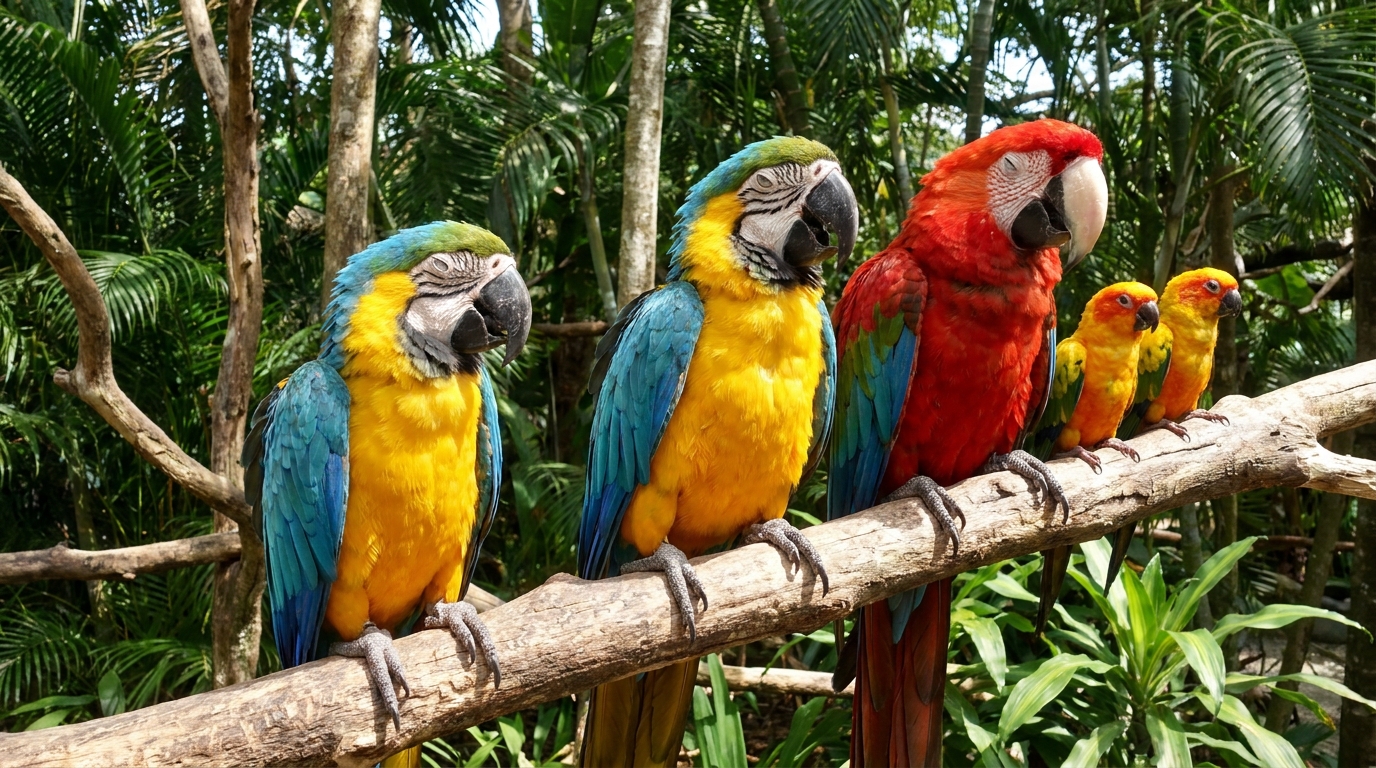
Parrots are not just pets; they are highly intelligent, complex, and social creatures that, in the wild, spend their days foraging, flying, socializing, and solving problems. When brought into a domestic environment, these innate behaviors don’t simply disappear.
Without adequate mental and physical stimulation, captive parrots can quickly become bored, stressed, and develop a range of behavioral and physical problems. This is where enrichment comes in. Providing a stimulating environment through various enrichment strategies is not just a luxury; it’s a fundamental necessity for your parrot’s mental well-being and overall health. Let’s explore why enrichment is so crucial and how to effectively implement it.
Why Enrichment is Non-Negotiable for Parrots
In their natural habitats, parrots are constantly engaged. They fly miles each day, search for food, interact with their flock, build nests, and avoid predators. A cage, no matter how large, cannot replicate this complexity. Without enrichment, parrots can suffer from:
•Boredom and Frustration: A lack of engaging activities leads to profound boredom, which can quickly escalate into frustration.
•Behavioral Problems: Boredom and stress are primary drivers of destructive behaviors such as feather plucking, screaming, aggression, and self-mutilation.
•Physical Health Issues: Lack of exercise can lead to obesity and related health problems. Chronic stress can also suppress the immune system.
•Reduced Quality of Life: A parrot that is not mentally stimulated is not living a full, happy life. Enrichment helps them express natural behaviors and thrive.
Key Pillars of Parrot Enrichment
Effective enrichment addresses a parrot’s natural instincts and needs. It can be broadly categorized into several key areas:
1. Foraging Enrichment
In the wild, parrots spend a significant portion of their day searching for food. In captivity, food is often readily available in a bowl, removing this vital mental and physical activity. Foraging enrichment encourages parrots to
work for their food, mimicking their natural behavior.
•Foraging Toys: These toys require your parrot to manipulate them to extract treats or food. They range from simple paper-wrapped treats to complex puzzle feeders.
•Hiding Food: Hide food items in various places around the cage or play area, under paper, in cardboard tubes, or within safe toys.
•Different Presentations: Offer food in novel ways, such as hanging vegetables from clips, stuffing them into toys, or scattering pellets on a clean tray.
2. Physical Enrichment
Physical activity is essential for a parrot’s health and well-being. It helps maintain muscle tone, prevents obesity, and provides an outlet for energy.
•Appropriate Cage Size: The cage should be large enough for your parrot to fully extend its wings and ideally fly short distances. It should also accommodate various perches and toys.
•Variety of Perches: Offer perches of different materials (natural branches, rope, concrete) and diameters to exercise their feet and prevent pressure sores.
•Out-of-Cage Time: Supervised time outside the cage is crucial for exercise, exploration, and social interaction. A play stand or a designated parrot-safe room can provide this.
•Flight: If safe and appropriate, allowing your parrot to fly in a secure environment is the best form of exercise.
3. Social Enrichment
Parrots are highly social animals. In the wild, they live in flocks and interact constantly. In a home environment, you become their flock.
•Daily Interaction: Spend quality time with your parrot daily. Talk to them, play with them, and include them in family activities (when safe and appropriate).
•Training: Positive reinforcement training sessions are excellent for social bonding and mental stimulation.
•Mirrors (Use with Caution): While some parrots enjoy mirrors, they can sometimes lead to obsessive behavior or aggression towards their reflection. Monitor your parrot’s reaction.
•Companion Bird (Consider Carefully): If you have the resources and space, a compatible companion bird can provide social interaction. However, this is a significant commitment and requires careful consideration of species, temperament, and potential health risks.
4. Sensory Enrichment
Engaging a parrot’s senses—sight, sound, touch, and taste—is vital for a rich environment.
•Visual: Rotate toys, change cage arrangement, provide a view of the outside world (safely), or even play parrot-friendly videos.
•Auditory: Play music, talk to your parrot, or provide natural sounds. Avoid constant loud noises.
•Tactile: Offer a variety of textures through toys, perches, and shreddable materials.
•Olfactory: Introduce safe, natural scents like fresh herbs or flowers (ensure they are non-toxic).
5. Destructive/Manipulative Enrichment
Parrots love to chew, shred, and manipulate objects. Providing safe outlets for these natural behaviors is crucial.
•Shreddable Toys: Paper, cardboard, untreated wood, natural fibers. These allow parrots to exercise their beaks and satisfy their urge to destroy.
•Chew Toys: Hardwood blocks, natural branches (safe species only), mineral blocks. These help keep beaks trimmed and provide mental engagement.
•Puzzle Toys: Toys that require manipulation to get a reward.
Implementing an Enrichment Program
•Rotate Toys Regularly: Parrots get bored quickly. Rotate toys in and out of the cage every few days to keep things fresh and exciting.
•Observe Your Parrot: Pay attention to what your parrot enjoys and what they ignore. Tailor your enrichment program to their individual preferences.
•Safety First: Always ensure all enrichment items are safe, non-toxic, and free from small parts that could be ingested.
•Be Creative: Don’t be afraid to experiment with new ideas. Simple household items like cardboard tubes, paper towel rolls, or even safe branches from outside can be great enrichment.
Conclusion
Parrot enrichment is not just about providing toys; it’s about creating an environment that stimulates their minds, exercises their bodies, and fulfills their social needs. By understanding the importance of foraging, physical activity, social interaction, sensory stimulation, and destructive play, you can design a comprehensive enrichment program that prevents boredom, reduces behavioral problems, and significantly enhances your parrot’s mental well-being.
A well-enriched parrot is a happier, healthier, and more engaged companion, bringing even more joy to your life. Invest in their mental health, and your feathered friend will thrive.