For a parrot, its cage is more than just a living space; it’s its home, sanctuary, and playground. Choosing the right cage is one of the most critical decisions a parrot owner will make, directly impacting the bird’s physical health, mental well-being, and overall happiness.
A cage that is too small, poorly designed, or made from unsafe materials can lead to stress, behavioral problems, and even physical injury. Conversely, a well-chosen cage provides a secure, stimulating environment where your feathered friend can thrive. This buyer’s guide will walk you through the essential considerations for selecting the perfect cage for your parrot.
Size Matters: Bigger is Always Better
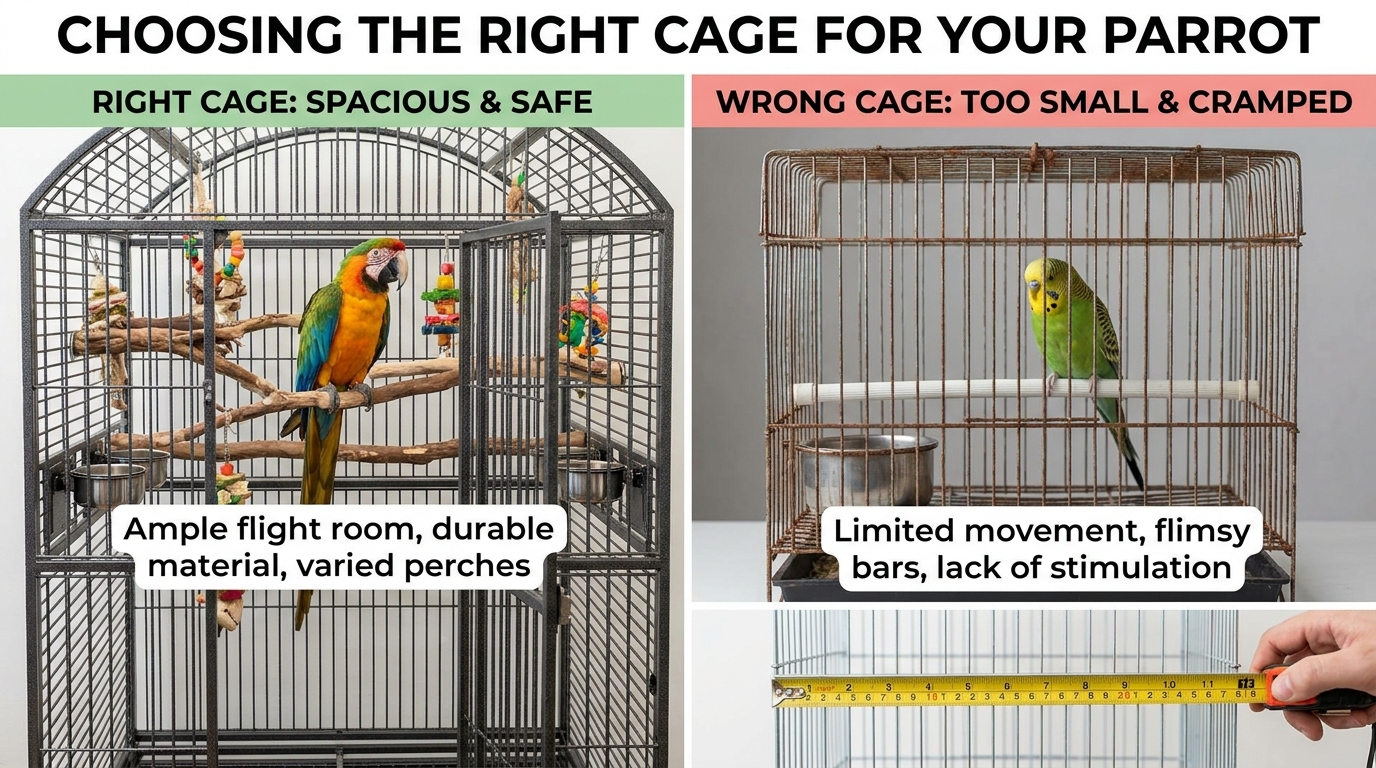
The most common mistake new parrot owners make is purchasing a cage that is too small. Parrots need ample space to move around, climb, stretch their wings, and play with toys without their tail feathers constantly brushing against bars or objects. While minimum dimensions exist, always aim for the largest cage you can reasonably afford and accommodate in your home.
•Width and Depth: These dimensions are often more important than height. A wider and deeper cage allows for more horizontal movement and space for toys and perches.
•Species-Specific Needs: Different parrot species have different space requirements. A Budgie will need a much smaller cage than a Macaw. Research the specific needs of your parrot’s species.
•Minimum Guidelines (General):
•Small Parrots (e.g., Budgies, Lovebirds, Cockatiels): Minimum 18″x18″x18″
•Medium Parrots (e.g., Conures, Quakers, African Greys, Amazons): Minimum 24″x24″x30″
•Large Parrots (e.g., Cockatoos, Macaws): Minimum 36″x36″x48″ (and often much larger is recommended)
Bar Spacing: A Critical Safety Factor
Bar spacing is crucial for your parrot’s safety. If the bars are too wide, your parrot could get its head or body stuck, leading to injury or even death. If they are too narrow, it can hinder climbing and interaction.
•Too Wide: A parrot can get its head stuck between bars that are too wide.
•Too Narrow: Can prevent climbing and make it difficult for the parrot to interact with its environment.
•Species-Specific Needs: Again, this depends on the size of your parrot.
•Small Parrots: 1/2″ to 5/8″
•Medium Parrots: 3/4″ to 1″
•Large Parrots: 1″ to 1.5″
Material and Construction: Durability and Safety
The material and construction of the cage are vital for both durability and your parrot’s health. Parrots are strong chewers, and the cage must withstand their powerful beaks.
•Stainless Steel: The safest and most durable option. It’s non-toxic, easy to clean, and resistant to rust and corrosion. It’s also the most expensive.
•Powder-Coated Wrought Iron: A good, more affordable alternative to stainless steel. Ensure the powder coating is non-toxic and chip-resistant. Avoid cages with chipped or peeling paint.
•Galvanized Steel (Post-Weld): Can be safe if properly manufactured (galvanized after welding to prevent zinc toxicity). Avoid pre-galvanized cages.
•Avoid: Cages made with lead, zinc, or copper, as these metals are toxic to birds. Also, avoid cages with sharp edges or flimsy construction.
Cage Design and Features: Enhancing Comfort and Stimulation
Beyond size and material, certain design features can significantly enhance your parrot’s living experience.
•Horizontal vs. Vertical Bars: A combination of both is ideal, but more horizontal bars are beneficial for climbing.
•Door Latches: Parrots are intelligent escape artists. Ensure latches are bird-proof (e.g., L-shaped latches, padlock-compatible).
•Pull-Out Grate and Tray: Essential for easy cleaning and hygiene. The grate prevents your parrot from walking in its droppings.
•Seed Guards: Help contain mess around the cage.
•Playtop or Domed Top: Offers extra space and enrichment outside the main living area.
•Feeder Doors: Swivel or drop-down feeder doors make it easy to change food and water without reaching into the cage, reducing stress for the bird.
•Wheels: For larger cages, wheels are invaluable for moving the cage for cleaning or repositioning.
Perches: Variety is the Spice of Life
Providing a variety of perches is crucial for foot health and mental stimulation. Avoid uniform dowel perches, which can lead to foot problems.
•Natural Branches: Offer varying diameters and textures, which help exercise foot muscles and keep nails trimmed. Ensure they are bird-safe (e.g., apple, pear, oak, maple – avoid cherry, peach, plum).
•Rope Perches: Provide a soft surface and can be manipulated.
•Cement/Grooming Perches: Help keep nails and beaks trimmed, but should not be the primary perch.
•Placement: Place perches at different heights and orientations to encourage climbing and movement.
Placement: Where to Put the Cage
The location of the cage in your home is almost as important as the cage itself.
•Social Area: Place the cage in a central, social area of your home where your parrot can feel part of the family, but not in a high-traffic, noisy thoroughfare.
•Avoid Drafts and Direct Sunlight: Protect your parrot from extreme temperatures.
•Wall Placement: One side of the cage against a wall can provide a sense of security.
•Height: The cage should be at a height where your parrot feels secure and can interact with you at eye level.
•Kitchen Avoidance: Avoid placing the cage in the kitchen due to fumes from non-stick cookware (PTFE), which are highly toxic to birds.
Conclusion
Choosing the right cage for your parrot is a significant investment in their health and happiness. Prioritize size, ensuring it’s large enough for your specific species, and pay close attention to bar spacing for safety. Opt for durable, non-toxic materials like stainless steel or powder-coated wrought iron.
Look for practical design features that facilitate cleaning and provide enrichment. Most importantly, offer a variety of perches and place the cage in a safe, social area of your home. By making an informed decision, you’ll provide your feathered companion with a comfortable, stimulating, and secure home where they can thrive for many years to come.