Bringing a new parrot into your home is an exciting experience, but it’s important to remember that these intelligent birds are often wary of humans, especially if they haven’t been hand-raised or properly socialized. Taming your parrot is a process of building trust, patience, and consistent positive interaction.
It’s not about forcing your bird to do what you want, but rather about creating a bond where they feel safe, comfortable, and willing to engage with you. This step-by-step guide is designed for beginners, offering a gentle approach to taming your parrot and fostering a loving relationship.
Understanding Your Parrot’s Perspective
Before you begin, try to see the world from your parrot’s point of view. To a wild bird, a human is a large, potential predator. Their natural instinct is to be cautious. Any sudden movements, loud noises, or attempts to grab them can reinforce this fear.
Taming is about overcoming this natural wariness and showing your parrot that you are a source of positive experiences, not a threat.
Essential Principles for Taming
•Patience is Paramount: Taming takes time, sometimes weeks or even months. Do not rush the process. Every parrot is an individual, and some will take longer than others.
•Consistency is Key: Regular, short, positive interactions are far more effective than infrequent, long, or forced sessions.
•Positive Reinforcement: Always reward desired behaviors with treats, praise, or gentle head scratches (if they enjoy them). Never use punishment, as it will destroy trust.
•Respect Boundaries: Learn to read your parrot’s body language. If they seem stressed, fearful, or aggressive, back off and try again later.
•Start Small: Break down the taming process into tiny, achievable steps.
Step-by-Step Taming Guide
Step 1: Acclimation and Observation (Days 1-7+)
When your parrot first arrives, give them time to adjust to their new environment. Place their cage in a quiet, social area of your home, but avoid high-traffic zones initially. For the first few days:
•Leave Them Alone: Resist the urge to constantly interact. Let them get used to the sights, sounds, and smells of your home.
•Quiet Presence: Spend time near the cage, talking softly, reading, or doing quiet activities. This helps them get used to your presence without feeling threatened.
•Observe: Watch your parrot’s body language. Are they relaxed? Stressed? This will inform your next steps.
Step 2: Building Trust Through Proximity (Days 3-14+)
Once your parrot seems comfortable in their cage and with your presence, you can start building trust.
•Talk Softly: Speak to your parrot in a calm, soothing voice. Use their name frequently.
•Offer Treats Through Bars: Find out what treats your parrot loves (millet spray, small pieces of fruit, nuts). Offer them through the cage bars. Don’t try to touch them yet. The goal is for them to associate your hand with positive things.
•Hand in Cage (No Touch): Once they are comfortable taking treats through the bars, slowly introduce your hand into the cage, holding a treat. Don’t force them to take it. Just hold it there calmly. If they take it, great! If not, try again later. The goal is for them to be comfortable with your hand in their space.
Step 3: Hand-Feeding (Days 7-21+)
This is a crucial step in building trust and showing your parrot that your hand is safe.
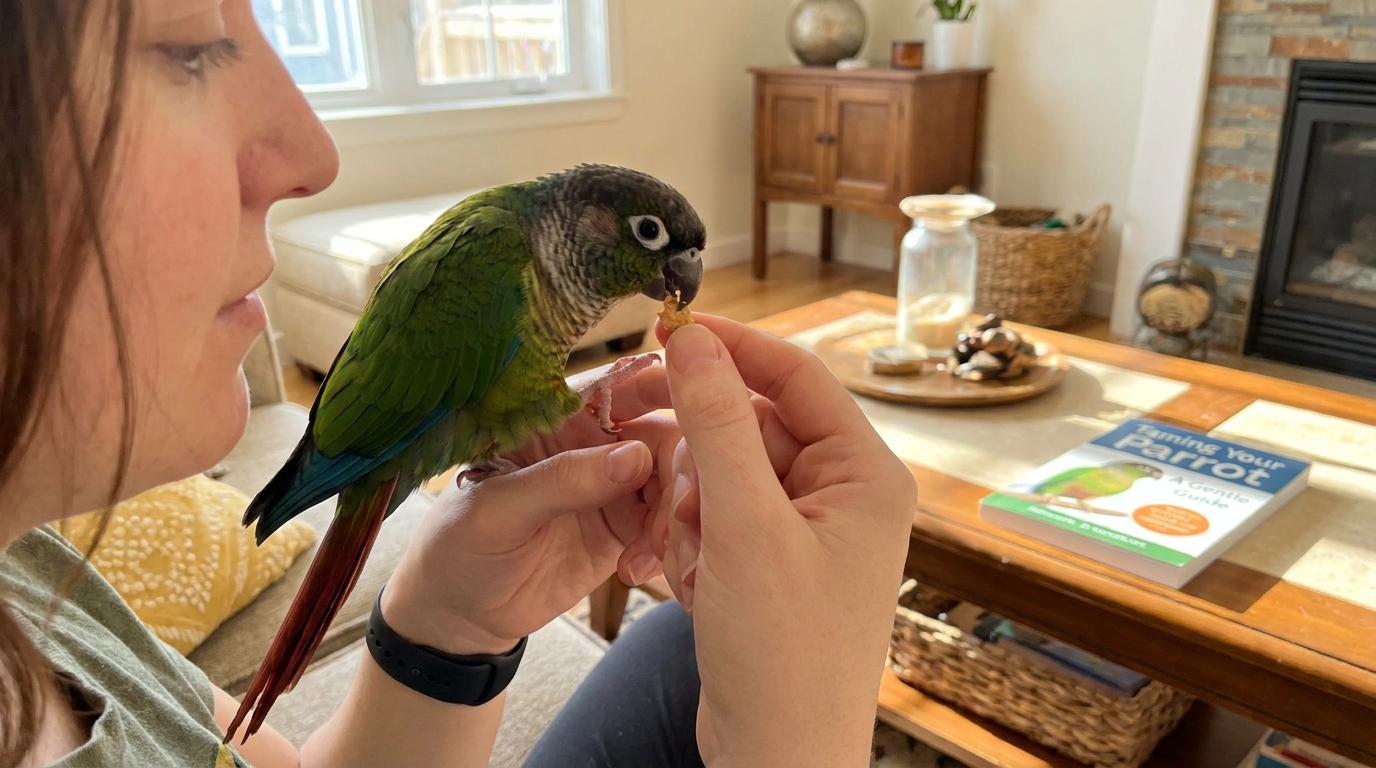
•Treat in Palm: Once your parrot is comfortable with your hand in the cage, hold a favorite treat in your open palm. Keep your hand still and don’t make direct eye contact initially.
•Patience: Wait for your parrot to approach and take the treat. This might take several attempts. If they nip, don’t react negatively; just withdraw your hand slowly and try again later.
•Gradual Progression: As they become more comfortable, you can gradually move the treat further back in your palm, encouraging them to step onto your hand to reach it.
Step 4: The “Step Up” Command (Weeks 2-4+)
The “step up” command is arguably the most important behavior to teach your parrot. It allows you to safely and easily move your bird from one location to another, preventing biting and making handling much simpler.
•Prepare: Ensure your parrot is comfortable with your hand in the cage and taking treats from your palm.
•Gentle Pressure: Gently present your finger or a perch just above their feet, pressing slightly against their lower chest. Most parrots will instinctively step up to maintain balance.
•Verbal Cue and Reward: As they step onto your finger/perch, say “Step up!” (or your chosen command), and immediately offer a treat and praise.
•Practice Short Sessions: Practice this frequently in short, positive sessions. If they resist, don’t force it. Try again later.
Step 5: Out-of-Cage Time and Socialization (Weeks 3-6+)
Once your parrot is reliably stepping up, you can begin to introduce supervised out-of-cage time.
•Safe Environment: Ensure the room is parrot-proofed (windows closed, fans off, no toxic plants or chemicals, other pets secured).
•Play Stand: A play stand with toys and perches can be a great way to encourage exploration outside the cage.
•Continue Interaction: Continue to talk to your parrot, offer treats, and engage in gentle play. This reinforces their bond with you.
•Respect Their Pace: Some parrots will be eager to explore, others will be more hesitant. Let them come out on their own terms.
Troubleshooting Common Challenges
•Biting: If your parrot bites, it’s usually out of fear, pain, or to establish boundaries. Don’t react with anger. A firm “No!” and withdrawing your hand (without yelping) can work. Try to understand the cause of the bite. Never punish physically.
•Screaming: Often a bid for attention. Teach your parrot that quiet behavior earns attention. Ignore screaming (if safe to do so) and reward quiet moments.
•Fearful Parrot: If your parrot is very fearful, go back to earlier steps. Sometimes, just sitting quietly near the cage for extended periods is the best approach.
Conclusion
Taming your parrot is a journey of patience, understanding, and positive reinforcement. By respecting their natural instincts, building trust through consistent gentle interactions, and celebrating every small victory, you can transform a wary bird into a loving, confident companion.
Remember that every parrot is unique, so adapt your approach to their individual personality and needs. The bond you forge through this process will be incredibly rewarding, leading to years of joy and companionship with your feathered friend.