Parrots are incredibly intelligent and complex creatures, and understanding their behavior is key to building a strong bond and ensuring their well-being. Unlike dogs and cats, whose body language is often more universally understood, parrot communication can be subtle and easily misinterpreted by the uninitiated.
From their vocalizations to their intricate body movements, every twitch and squawk carries a message. Learning to decode these signals will not only help you meet your parrot’s needs but also prevent misunderstandings that can lead to behavioral issues. Let’s dive into the fascinating world of common parrot behaviors and what your feathered friend is trying to tell you.
Vocalizations: The Parrot’s Symphony of Sounds
Parrots are renowned for their vocal abilities, which range from soft chirps to ear-splitting screams. Each sound serves a purpose:
•Chattering and Mumbling: Often heard when a parrot is content and relaxed, perhaps preening or playing quietly. It’s their way of talking to themselves or practicing sounds.
•Whistling and Singing: Many parrots enjoy whistling tunes or singing. This can be a sign of happiness, a way to get attention, or an attempt to mimic sounds they’ve heard.
•Squawking and Screaming: This is often the most challenging vocalization for owners. While it can indicate distress, fear, or pain, it’s also a natural way for parrots to communicate across distances in the wild (flock calls). In a home environment, it can be a bid for attention, a reaction to excitement, or a response to perceived threats. Understanding the context is crucial.
•Mimicry and Speech: Parrots’ ability to mimic human speech is legendary. They often associate words with actions or objects, using them to communicate their desires or simply to interact with their flock (you!).
Body Language: A Window into Their World
Parrots use their entire bodies to communicate. Paying close attention to these visual cues can tell you a lot about their mood and intentions.
Head and Face:
•Eye Pinning: Rapid dilation and constriction of the pupils. This indicates intense interest, excitement, or sometimes aggression. Context is everything.
•Flared Nostrils: Can be a sign of excitement or aggression.
•Puffed Cheeks: Often seen when a parrot is content or trying to appear larger and more intimidating.
•Head Bobbing: A playful gesture, often seen when a parrot is excited or soliciting attention.
•Head Lowered: If your parrot lowers its head towards you, it’s often an invitation for a head scratch or petting.
Feathers:
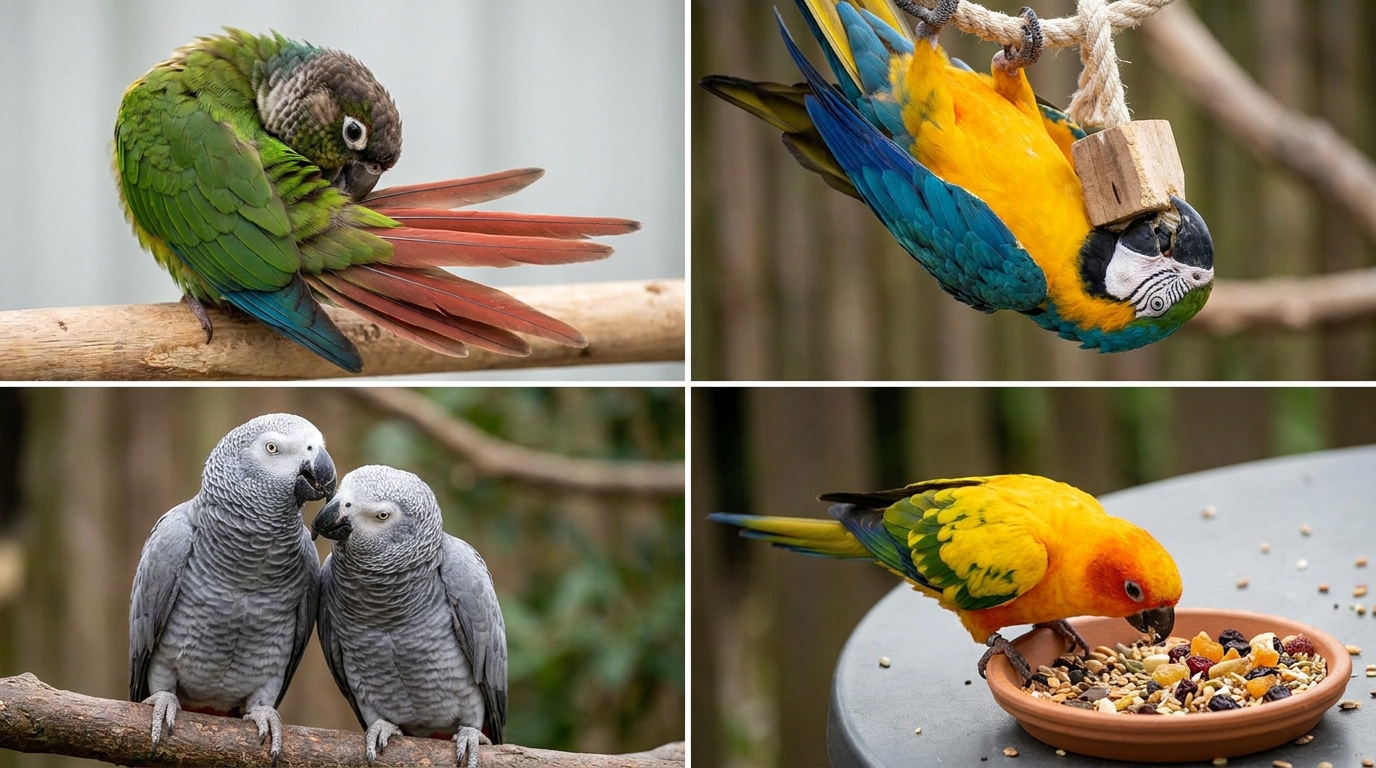
•Fluffing Feathers: A sign of relaxation and contentment, or sometimes a way to warm up. If accompanied by lethargy or sitting at the bottom of the cage, it can indicate illness.
•Ruffled Feathers: Can indicate fear, aggression, or discomfort.
•Sleeked Feathers: Feathers held tightly against the body can indicate fear, stress, or illness.
•Crest Position (Cockatoos, Cockatiels): An erect crest indicates excitement, curiosity, or alarm. A flattened crest can mean fear or aggression. A relaxed crest suggests contentment.
Wings and Tail:
•Wing Drooping: In young birds, it can be normal. In older birds, it can indicate illness, fatigue, or sometimes a desire for attention.
•Wing Flapping: Can be a form of exercise, a way to get attention, or a sign of excitement.
•Tail Wagging: Similar to dogs, a parrot wagging its tail can indicate happiness or excitement.
•Tail Fanning: Often seen in aggressive displays, making the bird appear larger.
•Tail Bobbing: If rhythmic and consistent, it can be a sign of respiratory distress and warrants veterinary attention.
Feet and Beak:
•Foot Lifting: A common sign of contentment, often seen when a parrot is comfortable and relaxed.
•Beak Grinding: A soft, grinding sound often heard when a parrot is content and settling down for sleep.
•Beak Clicking: Can be a sign of contentment or a warning to back off.
•Beak Wiping: After eating, or sometimes to clean their beak if something is bothering them.
•Biting: A serious behavior that can stem from fear, aggression, hormonal changes, or a lack of understanding of boundaries. Never punish biting; instead, try to understand the cause and redirect the behavior.
Common Behavioral Issues and Their Meanings
•Feather Plucking: A complex issue that can be caused by medical problems (parasites, allergies), environmental factors (dry air, lack of bathing), or psychological distress (boredom, stress, anxiety, lack of attention). Requires veterinary consultation.
•Screaming for Attention: Parrots are social and demand attention. If they learn that screaming gets a reaction, they will continue. Teach them that quiet behavior earns attention.
•Aggression: Can be territorial, hormonal, fear-based, or learned. Requires careful observation and often professional behavioral consultation.
Building a Better Understanding
•Observe: Spend time simply watching your parrot without interacting. Learn their normal behaviors and subtle cues.
•Context is Key: Always consider the situation when interpreting behavior. A squawk in the morning might be a flock call, while a squawk when you approach the cage might be a warning.
•Positive Reinforcement: Reward desired behaviors and ignore (when safe to do so) unwanted ones. This teaches your parrot what you want them to do.
•Enrichment: Provide plenty of toys, foraging opportunities, and out-of-cage time to keep your parrot mentally stimulated and prevent boredom.
•Consult an Avian Vet or Behaviorist: If you are struggling to understand or manage your parrot’s behavior, seek professional help. They can provide tailored advice and support.
Conclusion
Understanding your parrot’s behavior is an ongoing journey of observation, patience, and empathy. By learning to interpret their vocalizations and body language, you can gain invaluable insights into their emotional state and needs.
This deeper understanding will not only help you address potential problems but also strengthen the incredible bond you share with your feathered companion, ensuring a harmonious and fulfilling life together. Your feathered friend is constantly communicating; it’s up to us to learn their language.