Parrots are not just beautiful birds; they are highly intelligent, social, and complex creatures capable of forming deep bonds with their human companions. Beyond their stunning plumage and ability to mimic speech, parrots thrive on mental stimulation and interaction. Training, far from being a mere parlor trick, is a crucial aspect of responsible parrot ownership.
It builds trust, strengthens the bond between you and your bird, prevents behavioral problems, and ensures a happier, more well-adjusted parrot. This guide will introduce you to the basics of parrot training, emphasizing the importance of starting early and training smart.
Why Train Your Parrot?
Training a parrot goes beyond teaching them to step up or wave. It offers a multitude of benefits for both you and your feathered friend:
•Builds Trust and Strengthens Bond: Training sessions, when positive and consistent, create a foundation of trust and mutual respect. Your parrot learns to see you as a reliable leader and companion.
•Prevents Behavioral Problems: Many common parrot behavioral issues, such as biting, screaming, and feather plucking, stem from boredom, lack of stimulation, or misunderstanding. Training provides mental enrichment and clear communication, reducing these problems.
•Enhances Safety: A trained parrot is a safer parrot. Commands like “step up” or “come” can be life-saving in emergencies, preventing escapes or injuries.
•Mental Stimulation: Parrots are incredibly intelligent and require constant mental engagement. Training provides this, preventing boredom and promoting cognitive health.
•Facilitates Handling and Care: A parrot that is comfortable with handling makes routine care, such as nail trims, vet visits, and administering medication, much less stressful for everyone involved.
The Golden Rule: Positive Reinforcement
The most effective and humane way to train a parrot is through positive reinforcement. This means rewarding desired behaviors, making your parrot more likely to repeat them. Never use punishment, as it can damage trust, create fear, and lead to aggression or other behavioral issues.
Key Elements of Positive Reinforcement:
•High-Value Treats: Find out what your parrot loves most! Small pieces of nuts, seeds (in moderation), fruit, or even a favorite pellet can be powerful motivators.
•Verbal Praise: Use an enthusiastic, happy tone of voice, saying things like “Good bird!” or “Clever!”
•Head Scratches/Petting: If your parrot enjoys physical affection, a gentle head scratch can be a great reward.
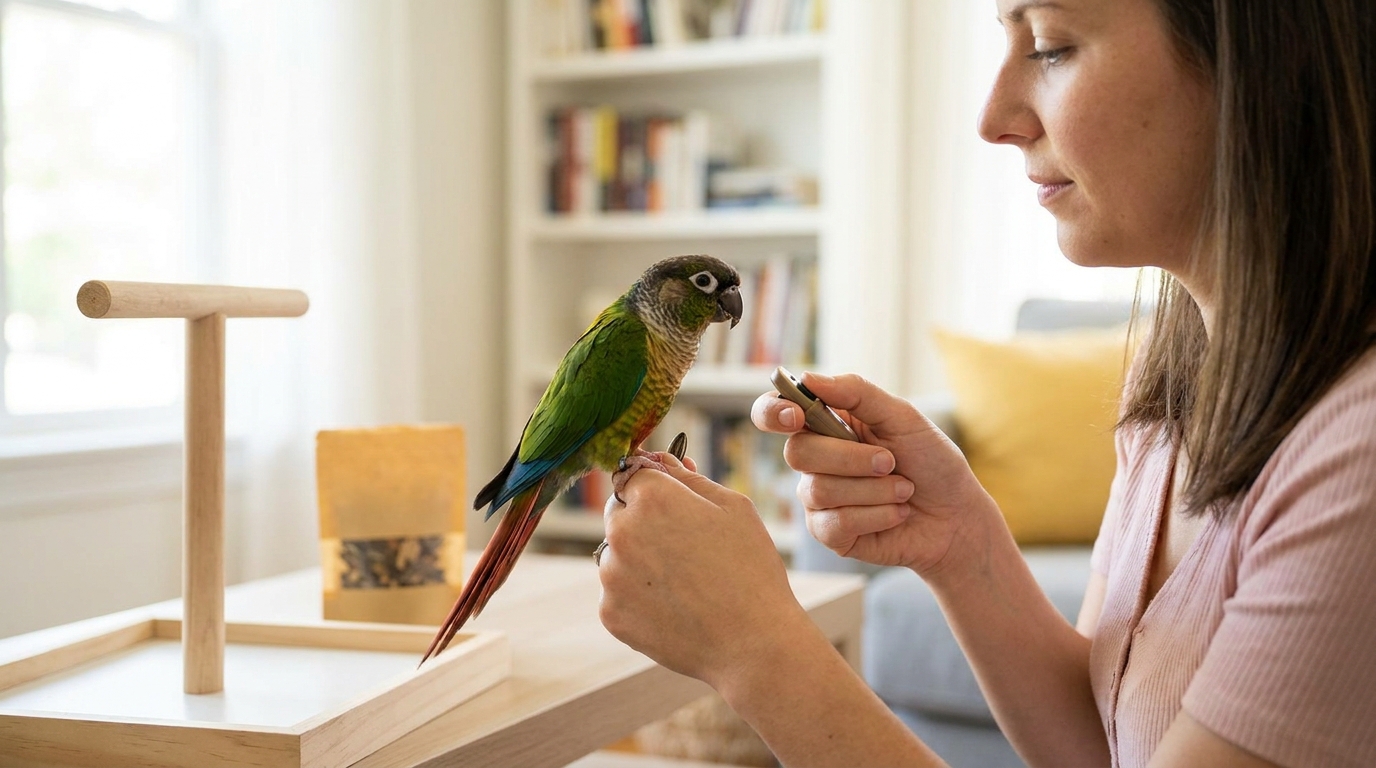
•Clicker Training: A clicker can be an incredibly effective tool. The click marks the exact moment your parrot performs the desired behavior, followed immediately by a treat. This precise timing helps your parrot understand exactly what they are being rewarded for.
Starting Early: The Sooner, The Better
While you can train a parrot at any age, starting when they are young (as soon as they are weaned and comfortable in their new home) is ideal. Young parrots are often more receptive to new experiences and less likely to have developed ingrained bad habits. Early training helps to shape their behavior from the outset, setting them up for a lifetime of good habits.
Essential First Steps in Parrot Training
1. Building Trust and Acclimation
Before any formal training begins, focus on building a strong, trusting relationship. Spend time near your parrot’s cage, talking softly, reading, or just being present. Offer treats through the bars. Let your parrot get used to your presence and hand without forcing interaction.
2. Target Training
Target training is often the first formal step in parrot training and is incredibly versatile. It teaches your parrot to touch their beak to a designated target (like a chopstick or a specific finger) on command.
•How to Do It: Hold the target near your parrot. The moment they touch it with their beak, click (if using a clicker) and immediately offer a treat. Gradually increase the distance and complexity, using the target to guide your parrot to step up, move to different perches, or even into their carrier.
3. The “Step Up” Command
The “step up” command is arguably the most important behavior to teach your parrot. It allows you to safely and easily move your bird from one location to another, preventing biting and making handling much simpler.
•How to Do It: Once your parrot is comfortable with your hand, gently present your finger or a perch just above their feet, pressing slightly against their lower chest. As they step onto your finger/perch, say “Step up!” (or your chosen command), click, and reward. Practice this frequently in short sessions.
Training Smart: Tips for Success
•Keep Sessions Short: Parrots have short attention spans. Keep training sessions brief, ideally 5-10 minutes, once or twice a day. End on a positive note, even if it means asking for an easy command they know.
•Be Consistent: Everyone in the household should use the same commands and rewards. Inconsistency will confuse your parrot.
•Patience is a Virtue: Training takes time. Some parrots learn quickly, others take longer. Never get frustrated or angry.
•Read Your Parrot’s Body Language: Pay attention to your parrot’s cues. If they are stressed, fearful, or uninterested, end the session and try again later.
•Break Down Complex Behaviors: If a behavior is too difficult, break it down into smaller, achievable steps. Reward each successful step.
•Make it Fun: Training should be an enjoyable bonding experience for both of you. Keep it light, positive, and engaging.
Conclusion
Parrot training is a rewarding journey that transforms your relationship with your feathered companion. By starting early, utilizing positive reinforcement, and focusing on essential commands like “step up” and target training, you can foster a well-behaved, confident, and happy parrot.
Remember that patience, consistency, and a deep understanding of your bird’s unique personality are the keys to success. Invest the time and effort into training, and you’ll be rewarded with a loyal, intelligent, and cherished companion for many years to come.