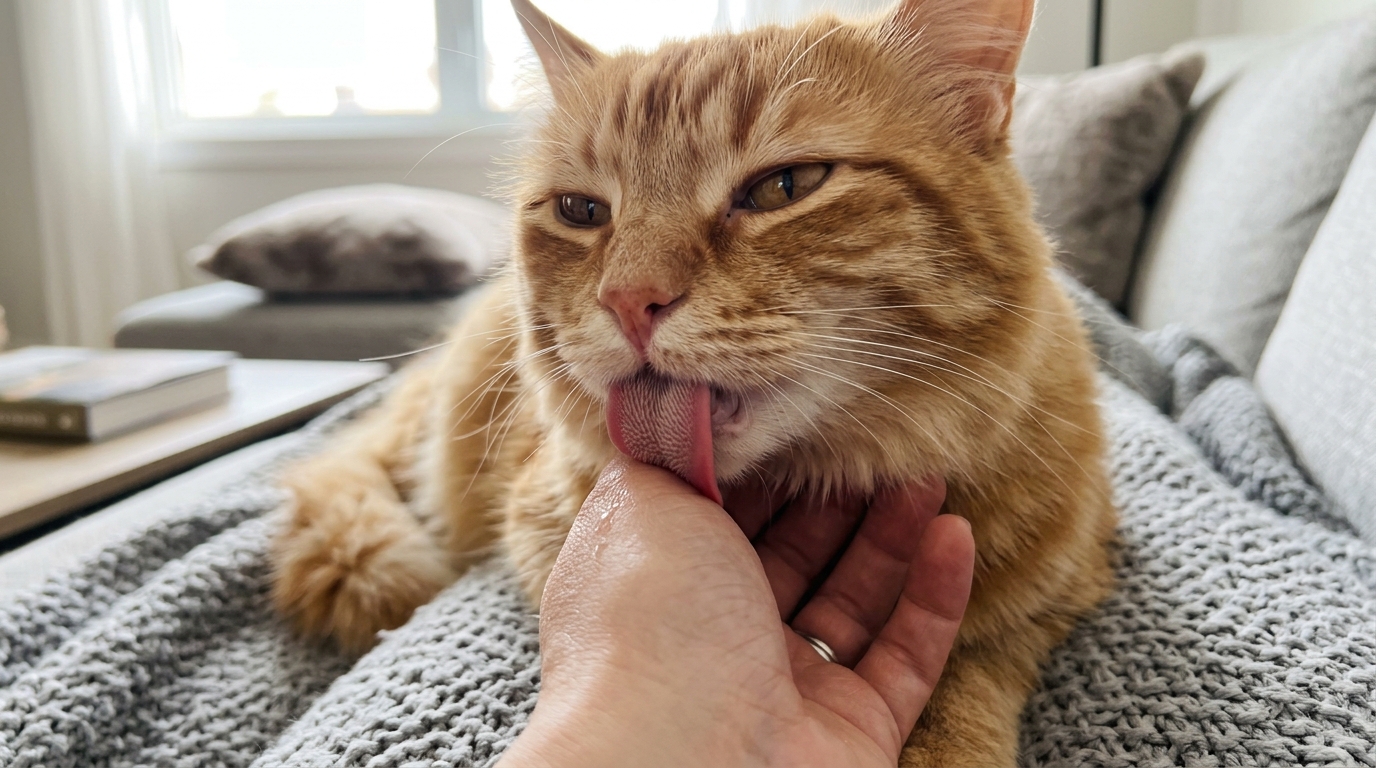
If you own a cat, you’ve likely experienced the peculiar sensation of your feline friend licking your skin with their surprisingly rough tongue. While it might feel a bit like sandpaper, this behavior is a common and often endearing part of cat-human interaction.
Far from being random, a cat’s lick is a complex form of communication, rooted in their natural instincts and social behaviors. Understanding why your cat licks you can deepen your bond and provide insights into their emotional state. Let’s explore the purr-fect explanations behind this unique feline gesture.
The Instinctual Roots of Feline Licking
To understand why your cat licks you, it’s helpful to look at their natural behaviors within their own species. Licking, or allogrooming, is a fundamental social activity among cats, particularly between mothers and their kittens, and among bonded adult cats. This behavior serves several crucial purposes:
•Grooming and Hygiene: Mother cats meticulously groom their kittens from birth, not only to keep them clean but also to stimulate circulation and digestion. This early experience teaches kittens that licking is a sign of care and comfort.
•Social Bonding: Allogrooming strengthens social bonds within a cat colony. Cats that groom each other are typically comfortable and trusting of one another, reinforcing their social hierarchy and group cohesion.
•Scent Exchange: Licking helps to spread scent, which is vital for feline communication. By licking you, your cat is essentially marking you with their scent, integrating you into their social group and claiming you as part of their family.
Decoding Your Cat’s Licks: More Than Just Grooming
When your cat extends this instinctual behavior to you, it carries a variety of meanings, most of which are positive and indicative of a strong relationship.
1. Affection and Bonding
This is perhaps the most common reason cats lick their owners. When your cat licks you, they are treating you as they would another cat they trust and care for. It’s a clear sign of affection, indicating that they feel comfortable, safe, and bonded with you. They are showing you that you are part of their inner circle, their family.
2. Marking You as Their Own
As mentioned, scent exchange is a critical aspect of feline social behavior. Cats have scent glands on their faces, paws, and flanks, but their saliva also carries their unique scent. By licking you, your cat is depositing their scent on you, effectively saying, “You are mine.” This is a territorial, yet affectionate, gesture that reinforces your place within their perceived family unit.
3. Seeking Attention
Sometimes, a lick can be a gentle (or not-so-gentle) way for your cat to get your attention. If you respond positively to their licks with petting or verbal praise, they learn that licking is an effective way to initiate interaction. They might be hungry, want to play, or simply desire some cuddles.
4. Comfort and Stress Relief
Licking can be a self-soothing behavior for cats, much like thumb-sucking in children. If your cat is feeling anxious, stressed, or even bored, they might lick themselves or you as a way to cope. While occasional stress licking is normal, excessive or compulsive licking (of themselves or you) could be a sign of underlying anxiety or a medical issue, and warrants a vet visit.
5. Taste and Curiosity
Cats are naturally curious creatures, and their sense of taste and smell is highly developed. They might be licking you simply because they’re curious about a scent or taste on your skin—perhaps residual food, lotion, or even just the salt from your sweat. This is often a fleeting behavior, driven by their investigative nature.
6. A Form of Communication
Beyond the specific reasons, licking is a general form of communication. It can be a way for your cat to tell you they appreciate your presence, that they want something, or that they are simply content in your company. Paying attention to the context—when, where, and how intensely they lick—can help you better understand their message.
When to Discourage Licking
While most cat licking is harmless and even endearing, there are a few instances where you might want to discourage it:
•Excessive or Painful Licking: If your cat’s licking becomes obsessive, causes skin irritation, or is accompanied by other signs of distress, it’s best to consult a veterinarian to rule out any medical or behavioral issues.
•Hygiene Concerns: If your cat licks areas of your body that are sensitive or have open wounds, it’s wise to gently redirect them to prevent potential infection.
•Unwanted Behavior: If you simply don’t enjoy being licked, you can gently push your cat away or redirect their attention with a toy or petting in a different area.
Conclusion
Your cat’s lick is a powerful and multifaceted gesture, often conveying deep affection, trust, and a desire for connection. It’s a testament to the strong bond you share, a feline way of saying, “You’re part of my family.”
By understanding the various reasons behind this behavior, you can better appreciate your cat’s unique language and respond in a way that strengthens your relationship. So, the next time your cat gives you a sandpaper kiss, remember it’s likely their purr-fect way of showing you some love.